Posted on

Video answers: Flying Private Jets

Here are the answers to last Friday’s video, enjoy!

Suggested ICAO level for video: 5+

Continue reading Video answers: Flying Private Jets
Posted on

Video: Flying Private Jets

This week’s video describes the economics of flying private jets. How can they be worth it?

Try to answer the following questions about the video and come back on Monday for the answers.

Suggested ICAO level for video: 5+

Continue reading Video: Flying Private Jets
Posted on

Video Answers: Air Traffic Control

Here are the answers to last Friday’s video, enjoy!

Suggested ICAO level for video: 5+

  1. Eurocontrol provides air traffic management services to 43 air navigation service providers, more than 500 airports and more than 1,000 airlines over the network.
  2. If a flight plan is rejected, it’s handed over to people who resolve the problem in coordination with the airline.
  3. Before an aircraft gets to a runway, ground control is responsible for it.
  4. It monitors upper airspace above 24,500ft over Belgium, the Netherlands, Luxembourg and north-west Germany.
  5. They have to maintain a minimum of 1,000ft of vertical separation and 5nm of horizontal separation.
  6. The controller has influence over the speed, altitude and direction of each flight.
  7. If there is an air traffic control delay, airlines can wait or they can choose an alternative route that would be more costly.

Follow us on twitter here, Facebook here for more great content!

Posted on

Video: Air Traffic Control

This week’s video describes how air traffic control works. Watch to find out how!

Try to answer the following questions about the video and come back on Monday for the answers.

Suggested ICAO level for video: 5+

Continue reading Video: Air Traffic Control
Posted on

Video answers: Building the 737MAX

Here are the answers to last Friday’s video, enjoy!

Suggested ICAO level for video: 5+

  1. It has paper checklists, a seven-step startup process, a warning light, physical cables to link fight controls to flight surfaces, all of which made it different to other modern aircraft.
  2. The original plan was to replace the 737 with an all-new aircraft.
  3. Fuel efficiency was less important for short-haul flight because these planes traditionally spent less time in the air per day than long-haul aircraft.
  4. Airlines are starting to use narrowbody aircraft for longer and longer flights.
  5. The American Airlines order for an ‘updated’ 737 convinced Boeing to modify the 737NG instead of building a totally new airplane.
  6. It would want a less modern, less efficient plane because they’re cheaper to buy and don’t require expensive training sessions to get their pilots type rated.
  7. Boeing had to move the engine higher and further forward on the wing to be able to fit it with the new, more efficient engine.
  8. MCAS was necessary because the new engine position and increased height of the landing gear created a tendency for the plane to pitch up more than the previous generation.
  9. It was likely caused by a malfunctioning MCAS sensor which kept pushing the plane’s nose down.

Follow us on twitter here, Facebook here for more great content!

Posted on

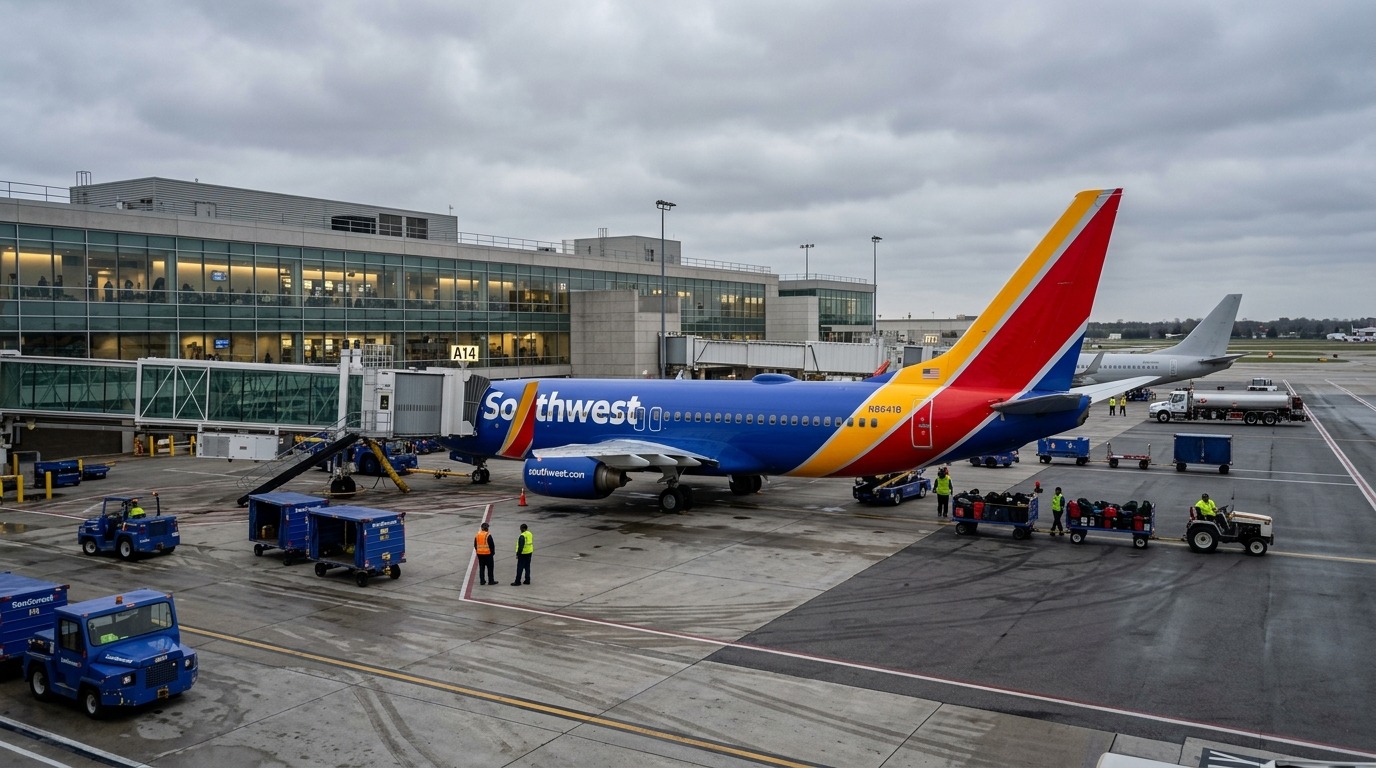
Video: Building the 737MAX

This week’s video discusses the circumstances that made Boeing decide to build the 737.

Try to answer the following questions about the video and come back on Monday for the answers.

Suggested ICAO level for video: 5+

Continue reading Video: Building the 737MAX